
Last updated:
Interested in fly fishing New Zealand? New Zealand is built for outdoor days — but seasons, bookings, and gear matter more than the brochure photos suggest.
This guide covers the practical side: where to go, what to book ahead, and how to slot the activity into a road trip without burning out.
Bottom line: Use this guide for fly fishing New Zealand — practical, realistic advice for your trip.
The NZ Fly Fishing Experience: What Makes It Unique?
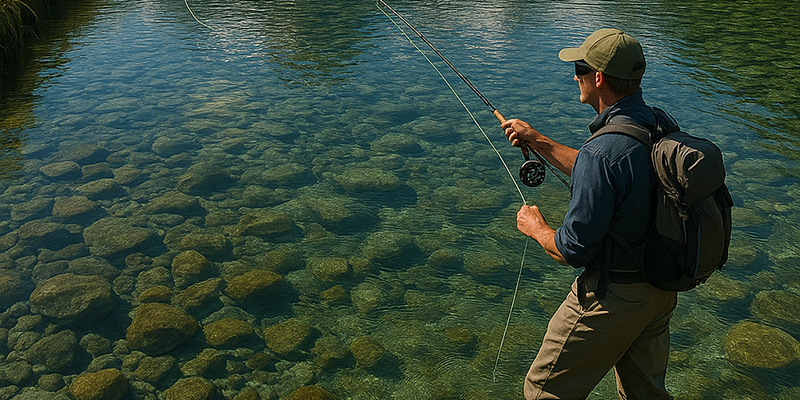
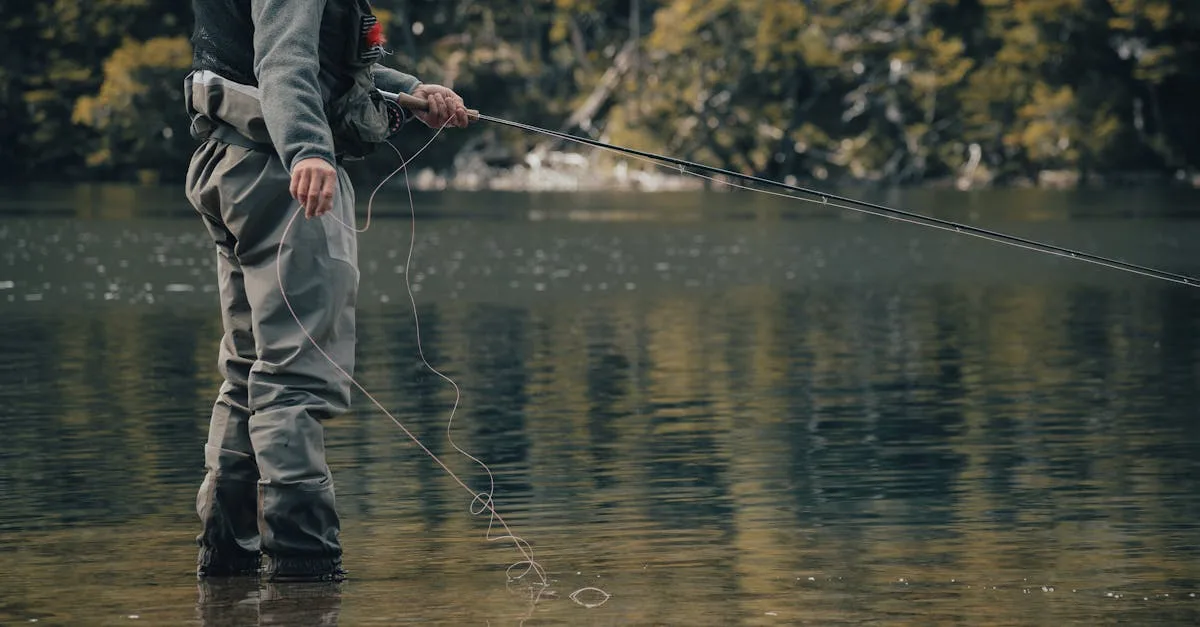
- It’s a Hunt, Not Just Fishing: The most common technique is “sight-fishing.” This involves walking the riverbank, actively searching for a fish holding in the current, and then planning your stalk and presentation to that specific fish. It’s a challenging and intensely rewarding discipline.
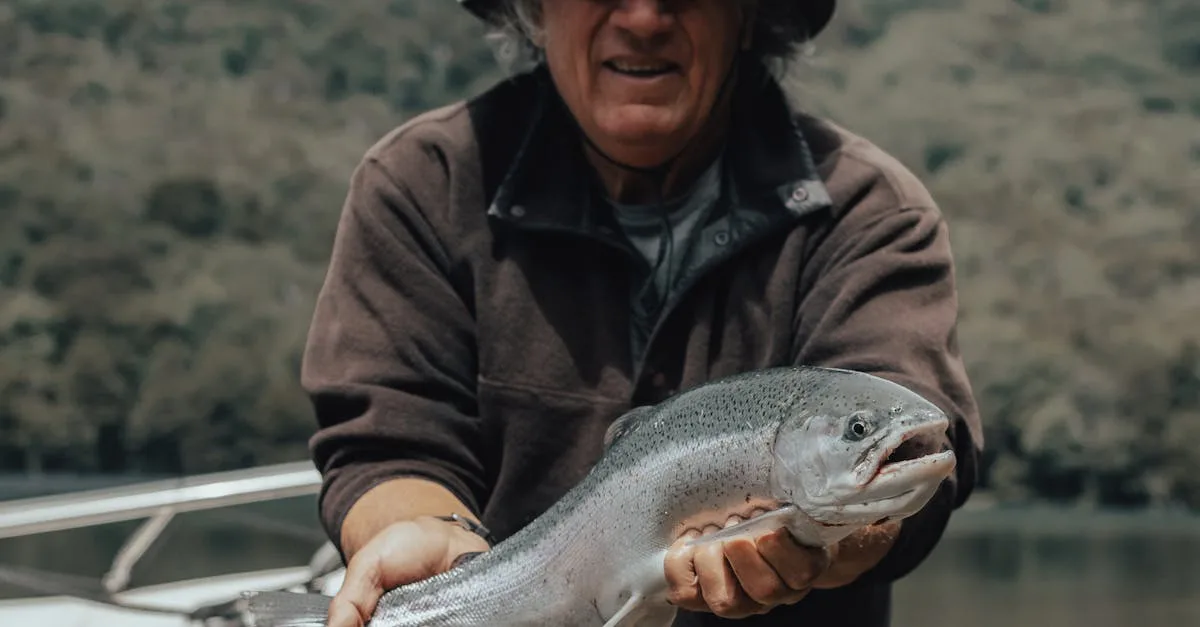
- Wild, Wary Fish: These are not stocked, naive fish. New Zealand’s trout are wild, strong, and have a PhD in telling the difference between a real insect and a poorly presented fly. They will test your skills like few other fish on Earth.
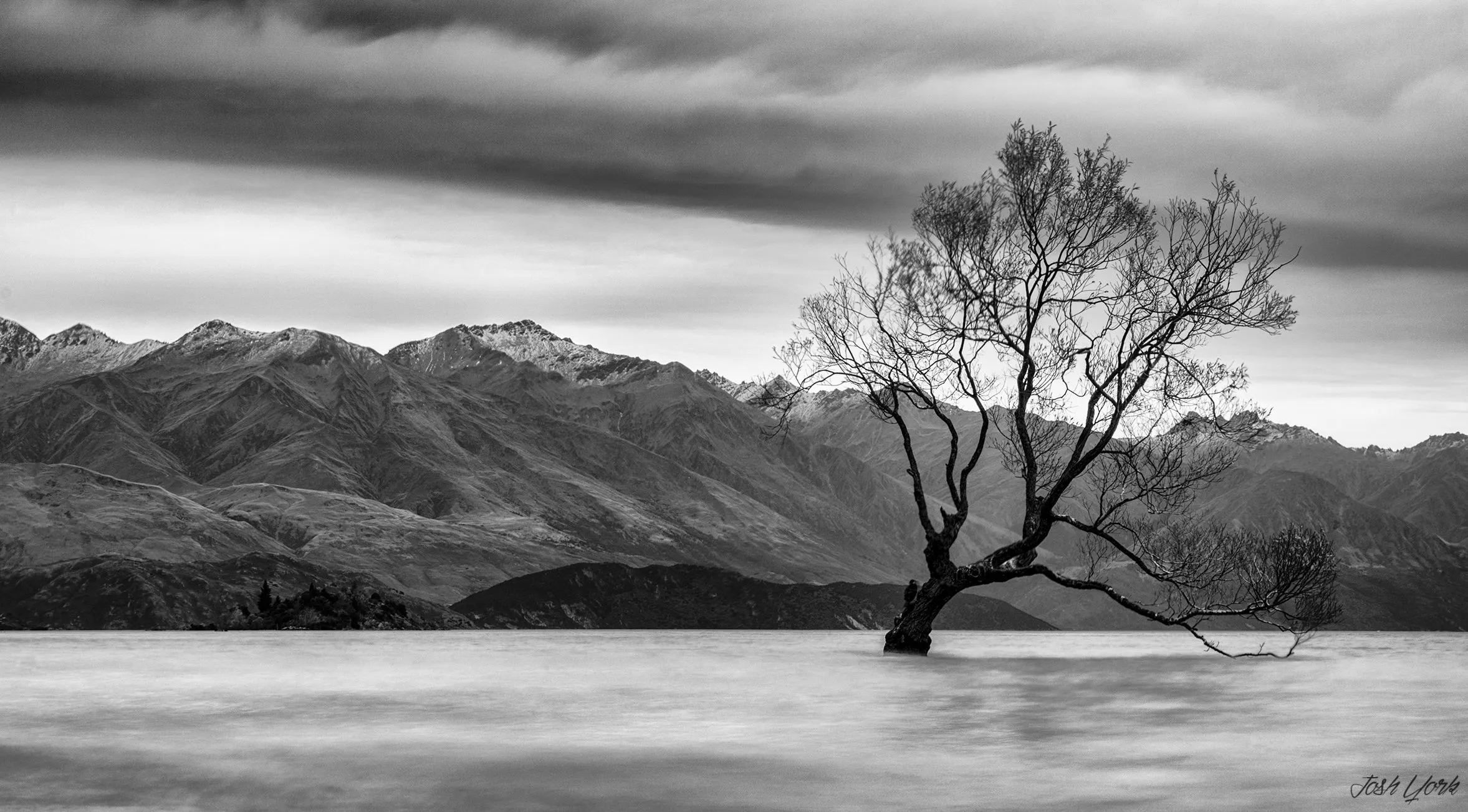
- Incredible Scenery & Solitude: You will be casting in some of the most beautiful landscapes imaginable. Due to the vast amount of water, it’s often possible to fish an entire day without seeing another angler.
Getting Legal: Your Fishing Licence Explained
This is the most important step. Fishing without a licence is illegal and carries heavy penalties. The system is simple and online.
- 1. The Fish & Game Licence: For 99% of the country, you need a licence from Fish & Game New Zealand. They administer all regions except for the Taupō district. You can buy a Non-Resident Licence online for a 24-hour, 3-day, or full-season period.
- 2. The Taupō Fishery Licence: The Lake Taupō catchment area, including the world-famous Tongariro River, is administered by the Department of Conservation (DOC). It requires a separate licence. If you plan to fish here, you will need to purchase a Taupō licence online.
Recommendation: Purchase your licence(s) online before your trip. Print a copy and also save a digital version to your phone.
A Guide to New Zealand’s Premier Fly Fishing Regions
Southland (Lower South Island)
- The Vibe: The holy grail for the brown trout purist. This is a region of lush green farmland, rolling hills, and spring-fed rivers.
- Key Rivers: The Mataura River is world-famous for its incredible “match the hatch” fishing during mayfly season. The Oreti, Aparima, and Waikaia rivers also offer legendary angling.
- Best Time: October-November for early season, and January-March for the terrestrial (cicada and beetle) and mayfly season.
Nelson/Marlborough (Top of the South)
- The Vibe: The ultimate adventure fishing. This region is home to countless backcountry rivers, many of which require a hike, 4WD, or even a helicopter to access.
- Key Rivers: The Wairau, Buller, and Motueka river systems are vast and varied. This is the place to find true wilderness fishing.
- Best Time: The summer months (December-February) are prime time for this region.
Central North Island (Taupō/Turangi)
- The Vibe: The rainbow trout capital of the world. The fishery is based around the massive Lake Taupō and the rivers that feed it.
- Key Rivers: The Tongariro River is the icon, famous for its powerful, silver rainbow trout that run up the river from the lake to spawn.
- Best Time: While open year-round, the main spawning runs provide incredible (and popular) fishing during the winter months (June-September).
The West Coast (South Island)
- The Vibe: Wild, rugged, and remote. This is fishing in a temperate rainforest. The weather can be challenging, but the rewards are solitary, large brown trout.
- Key Rivers: The rivers are too numerous and sensitive to name, but any river flowing out of the Southern Alps offers potential.
- Best Time: Only fishable during the summer and early autumn when rivers are low and clear (December-April).
Gearing Up: Rods, Flies, and CRITICAL Biosecurity Rules
- Rod & Reel: A quality 9-foot, 5-weight or 6-weight rod is the perfect all-rounder for New Zealand.
- Lines: A weight-forward floating line is all you need for 95% of situations. Bring long leaders (12-16 feet) tapered to 4x or 5x tippet.
- Flies: Leave the bright attractor patterns at home. NZ trout respond to natural imitations. Your essential fly box should include:
- Nymphs: Pheasant Tail Nymph, Hare’s Ear Nymph (sizes 12-18).
- Dries: Parachute Adams (12-16), a Cicada pattern (summer), a Manuka Beetle pattern (summer).
- Waders & Boots: Breathable waders are essential. For boots, rubber soles are the standard.
!! BIOSECURITY WARNING: CHECK, CLEAN, DRY !! New Zealand’s rivers are precious and fragile. To prevent the spread of invasive aquatic pests like didymo (‘rock snot’), you must follow the “Check, Clean, Dry” protocol. All your fishing gear (boots, waders, nets, lines) must be thoroughly cleaned and completely dry before entering a different river system. IMPORTANT: Felt-soled wading boots are BANNED in New Zealand. They cannot be decontaminated effectively and you will not be allowed to bring them into the country.
Your Secret Weapon: Why Hiring a Professional Guide is the Smartest Move
For your first trip, hiring a guide for at least your first couple of days is the best investment you can make.
- A good guide doesn’t just find you fish; they collapse a decade of learning into a single day. They will teach you the techniques for sight-fishing, provide the right flies, handle the logistics, and often provide access to private rivers you can’t get to on your own.
Planning a trip centered around the perfect catch?
Frequently asked questions
When is the best season for fly fishing New Zealand?
Check the specific activity — ski fields need winter, hiking is best in summer and shoulder months, and water sports depend on regional wind and swell.
Do you need to book activities in advance?
Popular tours, Great Walks, and Queenstown adventures sell out in summer. Book must-dos early; leave gaps for weather changes.
What gear should you pack for outdoor activities?
Layers, rain jacket, and sturdy shoes are baseline. Sun protection is essential — NZ UV is strong even on cloudy days.
Are guided tours worth it in New Zealand?
Guides help on technical hikes, cultural experiences, and activities where local safety rules matter. Self-guided works when trails are well marked.
Official sources: DOC tracks and huts, AdventureSmart outdoor safety, Tourism New Zealand things to do.
Related New Zealand travel guides
Need help planning your New Zealand trip?
Excursion NZ maps attractions between your start and end points, estimates realistic drive times, and helps you build a day-by-day plan without spreadsheet gymnastics.
From there you can select what attractions you want to see and we provide you with a plan including the travel time required.
Plan your New Zealand adventure
Use our interactive NZ travel map to discover attractions and plan realistic drive times along your route.
Create a travel plan